
‘Do you like esoteric books?’
This was the question my very first psychologist asked me last year. I didn’t know what ‘esoteric’ meant, but I wasn’t going to say that, of course.
—‘No, that’s not really my thing.’
I followed with an elaborate discourse on a book I was reading and why I thought it was such an excellent book. The psychologist didn’t seem impressed.
‘Maybe you want to try The Power of Now,’ she said after I’d finished. ‘I think it’s a very profound book. It might help you. It’s written by Eckhart Tolle.’
I bought the book and took it to a café in a park in Amsterdam. There, I ordered a beer, sat down, leafed to the start of the book, read a few lines, chatted with a friend sitting next to me, and tried to read some more lines. We were surrounded by loud-talking grown-ups and running-and-shouting children. Another line later I decided, This Eckhart’s Tolling mad, what a load of crock.
I closed the book, finished my beer, ordered another one, went home, referred Eckhart’s crock to the back of my bookshelf, and three psychology sessions later, told myself I was back on track. Goodbye psychologist!
Today, I feel no urge to pretend. I don’t know what ‘esoteric’ means and I don’t know what ‘holistic’ means, but following Steven’s advice, I contact a holistic therapist.
The therapist’s name is Korrie. When she opens the door, I see a stout woman in her fifties with greyish-black, curly hair and radiant, joyful eyes. She leads me into a warmly coloured space and invites me to sit on the sofa. Instead of taking the chair opposite me, she sits down next to me. We already spoke briefly on the phone, so she knows a little about what’s going on.
‘So, how are you now?’ she asks.
—‘Good!’
That’s been my standard answer for years, but today, I don’t even try. I look, not knowing what to say. Korrie grabs a piece of paper and starts drawing.
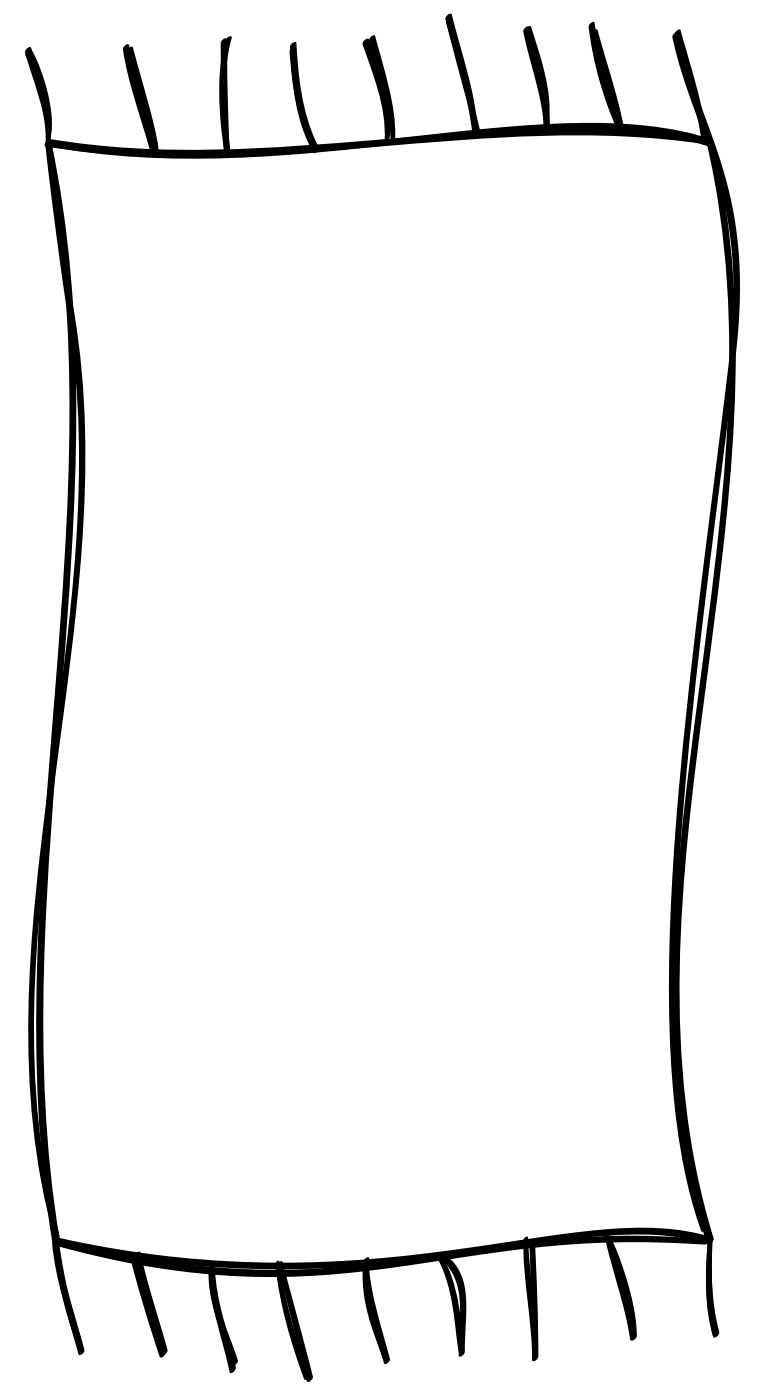
‘This is the Mat,’ she says. ‘We humans are all born on our Mat, and as babies, we know no better than being on our Mat. We get tired, go to sleep, wake up, get hungry—“Wèèèèèèh!”—eat, get tired again, and go to sleep again.’
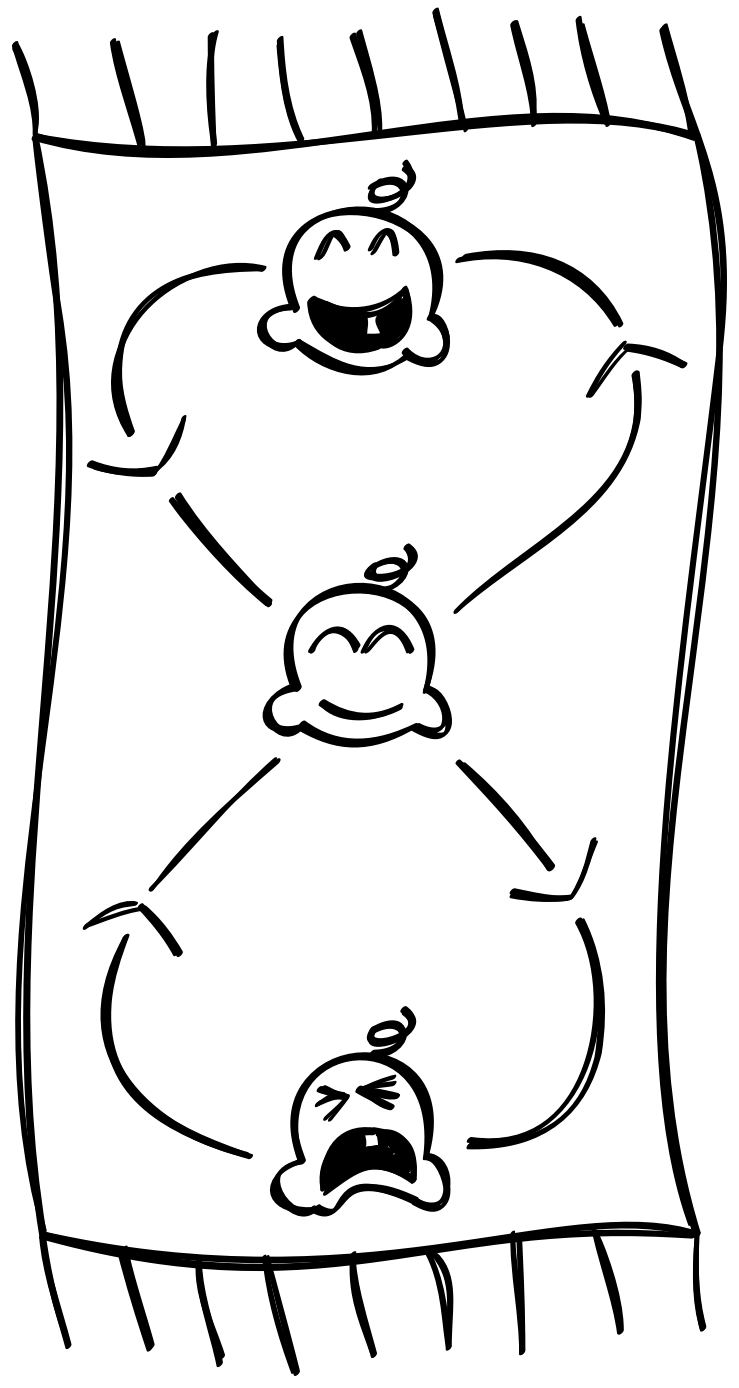
‘Young children are on their Mat day and night. But here comes humanity’s tragedy: pushing ourselves and each other over the edge. Either people strive incredibly hard, and then they’re doing well because, “Well done for trying so hard!” Or they give up, and then they’re doing it wrong because if you don’t strive, you’re doing it wrong: “Come on, let’s go!”’
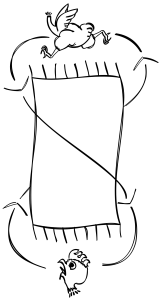
Korrie’s pen moves to the top of the sheet. ‘When we venture or run over the top, we stop thinking and start running around like headless chickens. And when we chicken around headlessly for too long and too hard, we become manic.
‘When we fall off the bottom edge of our Mat, we become heads without chickens, doing nothing but thinking. And when we think too long and too hard, we stop feeling and become depressed.’
‘And since children mainly learn from their parents, they start developing unconscious behaviour to get what they want. This behaviour can be called “ego” and it works for a while, until it stops working. People get sick, burn out, and whoop —’ (Korrie’s pen shoots to the bottom of the sheet) ‘they fall off the bottom edge of the Mat and lose their appetite for life, “Yeah, well, whatever, I don’t care anymore…”’
Korrie moves her pen from the bottom to the top and back again.
‘Many people constantly shoot from one side to the other. Below the bottom, they act negatively, only looking at what others are doing and saying, “Leave me alone; this is just who I am!” Over the top, they get emotional, don’t have time for anything and explode because the world never does what they want—“Come on, why aren’t you helping me?!”’
Korrie lifts her gaze from the drawing and looks at me. “Now, here’s the beauty of being on your Mat: you’re in touch. The word “con-tact” literally means “with feeling”.
‘On the Mat you develop, learn and feel, never sure where you’ll be this time next year. Off the Mat, you stagnate, always needing to know where you are today and where you’ll be tomorrow. So I see the Mat as an open, free, wonder-full space, and I help people by inviting them onto their Mat.’
My mind has trouble keeping up, but inside, there’s a redemptive sigh. A rose starts blooming in my throat and tears well up. I let them.
