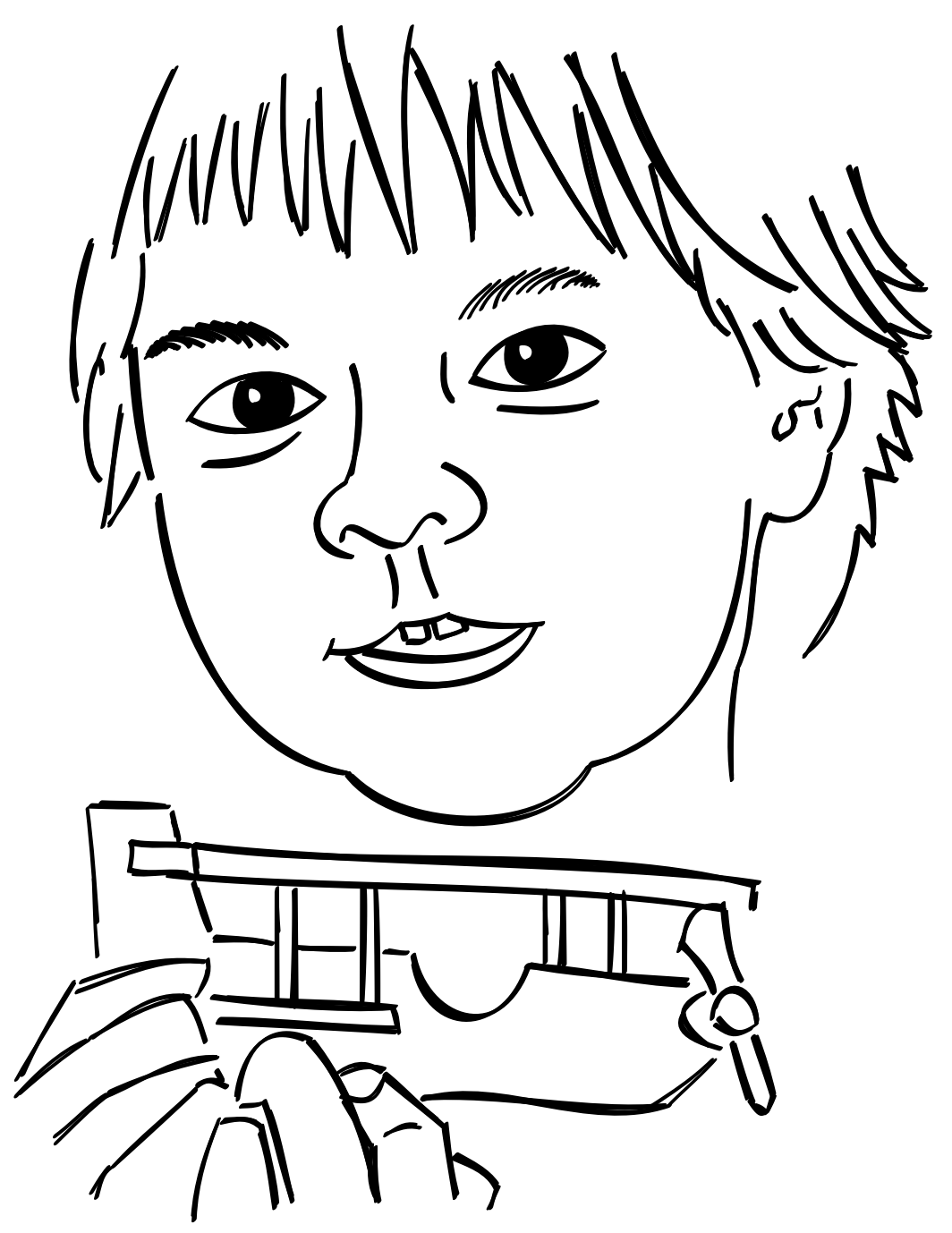
This is Emile. Emile loves flying and wants to become a pilot. Growing up, he discovers that pilot training is costly. Emile can’t borrow money from a bank because he owns no collateral (or ‘reserve’) that the bank could seize should he fail to repay the loan and its corresponding interest in a timely fashion. However, Emile’s father does have collateral: a house.
Oh, but shit, the house is collateral already, for the outstanding loan that Emile’s father took out years ago to buy the home.
Oh, but wait, there’s a way! According to an appraiser and the bank, the house has increased in value since Emile’s father bought it. This so-called excess value can serve as collateral for an extra loan.
Emile’s father is keen to see his son live a passionate life, so he signs for the extra loan. Emile’s dream is just one pilot’s licence away. He completes the training and can’t wait to get started.
He waits.
For six years.
‘I applied for so many positions so many times,’ he says in the documentary his sister Suzanne makes about him, ‘and the yearly trial checks I need to do to keep my licence are too expensive. I kept throwing money at it because I still had hope, and I no longer feel like doing that. It’s enough, loan-wise.’
—‘How much is it now?’ Suzanne asks.
‘It’s now 136,400 euros.’1The documentary is called Het laatste uur in de zon (‘The Last Hour in the Sun’). You can find more about it on the International Documentary Filmfestival Amsterdam website Idfa.nl.
The ordeal doesn’t lead to arguments in the family, but it does become part of it. Whenever Emile speaks to his father, he thinks about it, and his father, in turn, says the loan cut things in two. ‘We had a life before the signature and a life after.’
Emile’s story is a reality for many, many people. Millions work to pay back interest on a loan, without seeing the loan decrease, so they keep working just to cough up the interest. All because a dream didn’t turn out the way they envisioned.
Now, before you grab your pitchfork and storm into the nearest bank, I don’t believe the banker who made the loan to Emile’s father is happy about this. I’d sooner believe the banker feels shitty about it. But… a deal’s a deal, and if Emile’s father fails to honour the deal, the bank will lose the money the bank created out of nothing.
Plenty of bankers will jump at the opportunity to make the deal less dire, but dire it almost always remains. After all, like the executive says to the native American, ‘As a CEO, I have to make a profit.’
With this, I want to reiterate that financial scamming (or in this case, financial agreeing) stems from a deeper pattern, one that determines business as usual almost everywhere. Banks, bankers and people of wealth are part of this pattern, but not the cause.
_
- 1
