In our veins
—
It is no measure of health to be well-adjusted to a profoundly sick society.— Jiddu Krishnamurti
—
My father is quite the carpenter and taught me to make many things myself. We once built a kitchen from used scaffolding wood, working on it every weekend for two months. The job wasn’t finished then, but neither of us saw how to continue. For the next six months, I lived with half a kitchen; only then did I know where the drawers and oven would fit best. Soon after, Dad and I completed one of the most beautiful kitchens I’d ever seen.
I don’t have a lot of things and some call me a minimalist, but I find ‘essentialist’ more appropriate. I love things—things made with love and possessed by an air of quality.
Not easy to come by.
The vast majority of our current buildings, public spaces, utilities and other things I encounter are ugly and lifeless. And this, too, I’ve come to understand. In a debt-with-interest-economy, people are constantly pushing (and being pushed) to produce as much as possible as fast as possible for as little as possible. One price we and the Earth pay for this has already been addressed, but I see another loss:
- we buy new stuff all the time because new things are cheaper than repairing what we already have;
- we put furniture in the junkyard because we don’t make it ourselves;
- we throw away a third to half of our food because most of us don’t grow it in our gardens.1From Mark Boyle, ‘I live without cash – and I manage just fine’. The Guardian. 28 October 2009, TheGuardian.com.
The bulk of our daily food and things are carelessly produced, consumed and discarded. This holds as true for consumers as it does for retailers, suppliers and producers. Sellers who know (or want to know) where their things and raw materials come from, let alone under what conditions they were harvested or made, are still spread thinly. Many have no feelings for what they make, sell and buy.
In other words, our relationship with food, furniture, appliances and clothes is determined mainly by the retail price we pay for them. In our so-called busy lives, quality has become too much to ask for. Yes, we want to buy furniture made with love and attention, but… And no, we don’t want to have our things made by children’s hands in low-wage countries, but… And sure, we want to buy our food from small-scale, organic farms instead of supermarkets, but… And, of course, we want to run our businesses from a place of love and attention, but…
Having worked in a dozen or so cafés and restaurants, I witnessed many hospitality entrepreneurs go against the grain of the passion they had once started from. Working longer hours than feels good and healthy, preparing meals in a hurry instead of with attention, switching to cheaper suppliers with bad products, reacting more and more stressfully to everything and everyone—all to cope with the ever-increasing costs of running a business—of which rent or mortgage usually form the lion’s share, while forgetting why they were doing this again.
Being busy and making unloving choices are two ‘gains’ for which we may thank our collective thirst for comfort and progress. Another so-called gain is the luxury of standing on our own two feet. In Western society, it’s damn cool to be able to say that you’re financially independent. But is it? Is it cool to be able to pay for the freedom of not having to meet fellow human beings, not receiving favours you may want to return, and managing most of your life through mobile apps and digital bank accounts? Conversely, is it cool not to ask for help because you can’t afford help and/or unconsciously learned that you should always be able to solve everything on your own, by yourself, with ‘your’ money?
Cool or uncool aside and no matter what we do, we never stand on our own two feet and never live a lone life. We stand on the Earth thanks to the Earth. We live thanks to everything that gives life. Two humbling and enriching facts, which we deny when we unconsciously bow to the individualistic, ‘independence-making’ gospel of never enough.
And our denial doesn’t just make us poor spiritually—it literally makes us sick.
To illustrate, here’s a story that would become known as the ‘Roseto effect’.
By the end of the nineteenth century, many villages in Italy ran empty. One such village was called Roseto Valfortore. Fed up with their poverty, the Rosetans crossed to America, hoping to find new wealth there. In Pennsylvania, they established a new village under their familiar name: Roseto. People in the surrounding towns didn’t particularly like the Italian newcomers, so the Rosetans quickly learned that in America, too, they depended on each other.
Fifty years later, almost every household in Roseto consisted of three generations: the original immigrants, their adult children and their growing grandchildren. During the day, the village was quiet. Children attended school while their parents worked in nearby quarries and garment factories. In the evenings, Roseto livened up. Villagers walked into each other’s houses as if they were at home, set tables outside to share Italian feasts, walked together, organised festivals and celebrated life together.

In 1961, Roseto received a visit from Stewart Wolf, an American medical professor. Stewart had been invited to speak to a group of medics and afterwards grabbed a beer with a local doctor.
‘Do you know what’s so strange?’ mused the local doctor as they entered the bar. ‘Here in Roseto, there’s much less heart disease than in the neighbouring village of Bangor.’
Immediately, Stewart was all ears. In early 1960s America, heart disease could already be called an epidemic. Among men under sixty-five, it had even become the leading cause of death. Stewart asked for an explanation, but the local doctor didn’t have one.
Stewart requested to see Roseto’s death certificates and those of the surrounding villages. Bewildered, he browsed seven years back in time. In the neighbouring town of Bangor, heart attack rates ran in line with the US average; in Roseto, people made do with half the rates. Among men under sixty-five, heart attacks in Roseto were even virtually unheard of.
Adding everything up, Stewart found death rates in Roseto to be thirty to thirty-five per cent lower than the US average. To top it all up, Rosetans hardly ever went to the doctor.
Stewart’s bewilderment heralded a long-term study. Years later, one of his fellow researchers would say, ‘Roseto had no suicide, no alcoholism, no drug addiction and virtually no crime. No one in Roseto lived on welfare and no one had an ulcer. Rosetans were dying of old age, that’s it.’
How could this be? Was it the olive oil?
Stewart hired eleven dieticians to watch over Rosetans while they shopped and cooked. It wasn’t the olive oil—Rosetans had no money for olive oil. They cooked their meals in pork fat and topped their pizzas with sausages and eggs. A colossal 40 per cent of their calories came from animal fat.
So, were Rosetans fitter than elsewhere? Um, no, not exactly. In Roseto, they liked cigarettes, booze and—of course—food, lots of it.
Was it the genes? No. Italian Rosetans who had settled elsewhere in America were just as unhealthy as the average American, as were the descendants of those Rosetans.
Was it Roseto’s geography? Climate? Groundwater? Medical facilities? No, no, no and no: those were all the same as in surrounding villages…
For years, Stewart and his fellow researchers observed themselves silly, unable to find a physiological explanation for Roseto’s immunity. Having ticked off all options, Stewart could only draw one conclusion: it was because of Roseto’s close-knit community. More than good for the mind, the community was healthy for the body.
Had Stewart’s investigation stopped there, we’d be left with one side of the coin. But Stewart decided to keep following the village right when Roseto’s community began to show the first signs of cracking. As irony would have it, the very effort Rosetans had put into giving their children a better life undermined what made their lives so good.
Roseto might have been immune to disease; Roseto’s youngsters found it a deadly dull village. Luckily, thanks to their parents’ hard work, they were able to go elsewhere to study. Returning a few years later, they brought different ideas and fresh blood. More and more Italian Americans married non-Italian Americans. Church attendance dropped, three-generation households became one-generation households, and soon, the American dream proved too big for the original dwellings.
Young families moved to the outskirts of the village to populate newly built houses, complete with fences, swimming pools and all the comfort and style a person could want.
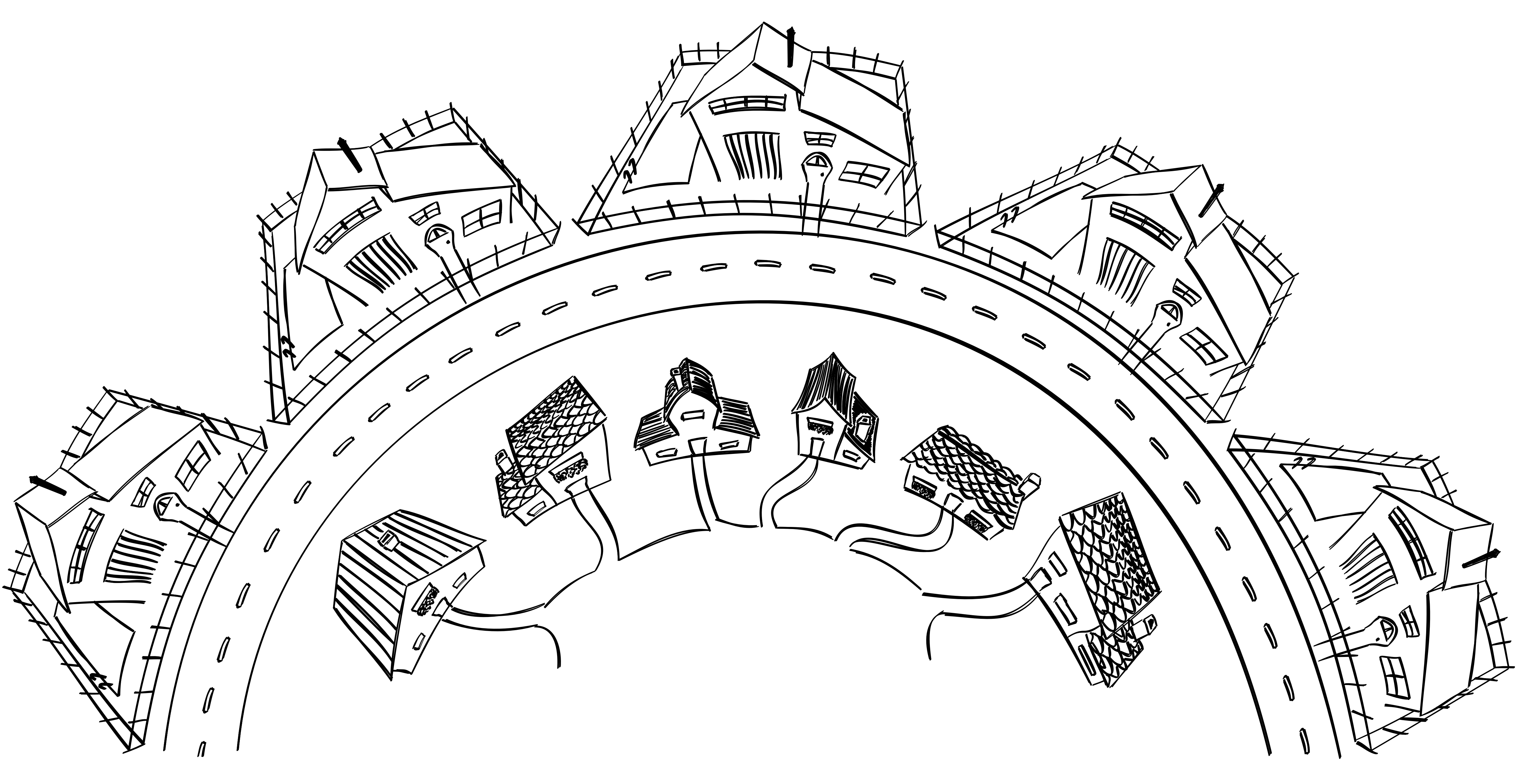
While all of this was happening, Roseto’s heart disease rates doubled and cases of high blood pressure tripled. By 1980, almost 20 years after Stewart first walked into the village, Roseto was way up there with the average American when it came to heart attacks.
Stewart added the following to his original conclusion: from the moment we separate ourselves from each other, we’re easy prey to life’s challenges. We become more susceptible to stress, and if stress persists long enough, we get sick.2I found information on the ‘Roseto Effect’ in Lissa Rankin’s book Mind over Medicine and in ‘The Roseto Effect, class notes from the University of Illinois’, available via Uic.edu. A fairly well-known later study on the world’s happiest and healthiest societies can be found in the widely read book Thrive: Finding Happiness the Blue Zones Way, written by Dan Buettner.
Stewart wouldn’t be the only one drawing such conclusions. Subsequent studies have also indicated that the quality of our relationships greatly determines our health and happiness. A close, supportive community keeps stress at bay, prevents illness and can even heal us. Without such a community, the opposite happens.
Telling this story is like kicking at an open door, yet I too was amazed when I first read about Roseto. Why, when it makes so much sense? This is my answer now: our confusion only becomes visible when we dare to stand still—and look at what we allow ourselves to be possessed by.
And in a world where never enough sets most people’s pace, many of us need to do a lot of stressful running before we grind to a halt.
_
- 1From Mark Boyle, ‘I live without cash – and I manage just fine’. The Guardian. 28 October 2009, TheGuardian.com. ↩︎
- 2I found information on the ‘Roseto Effect’ in Lissa Rankin’s book Mind over Medicine and in ‘The Roseto Effect, class notes from the University of Illinois’, available via Uic.edu. A fairly well-known later study on the world’s happiest and healthiest societies can be found in the widely read book Thrive: Finding Happiness the Blue Zones Way, written by Dan Buettner. ↩︎
