The story of the village
Imagine you live in a village, where you and your fellow villagers grow food, milk cows, make stuff and build things. You exchange, but mostly you help each other and give off your surplus. After all, you’d rather see your milk being used before it sours, and should you ever come up short, surely there will be someone with too much who can help you out.
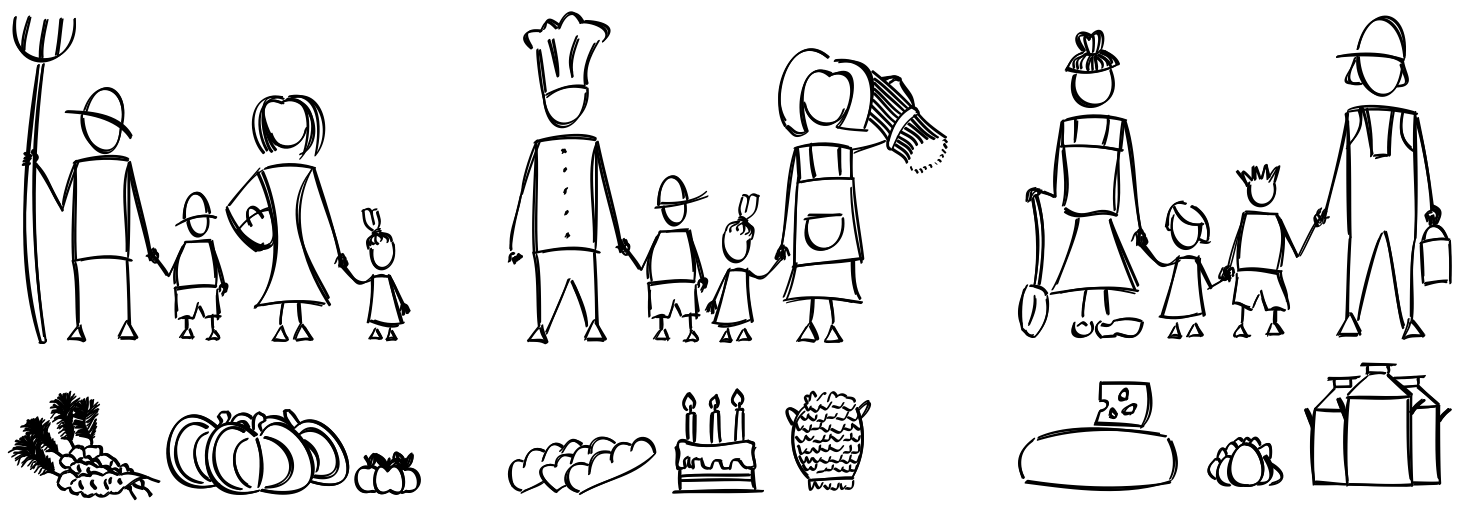
This works. There’s always enough, never too much and no need for more. You live life together and trust each other, and that’s what you build on.
One day, a man wearing a cream-coloured suit and shiny shoes enters the village. He explores your dwellings, talks to some villagers and then calls a meeting.
‘What you’re doing,’ he says firmly, ‘makes no sense. You’re making life far too difficult. I’m going to help you.’
No one in the village finds life difficult, but the man does make you curious, ‘Could life be easier than it already is?’ So you listen.
‘I have an innovative idea,’ the man continues. ‘Every family in this village will receive ten notes from me. Each note will read “ten euros”, and from now on, you will use these notes to exchange and negotiate with each other.’
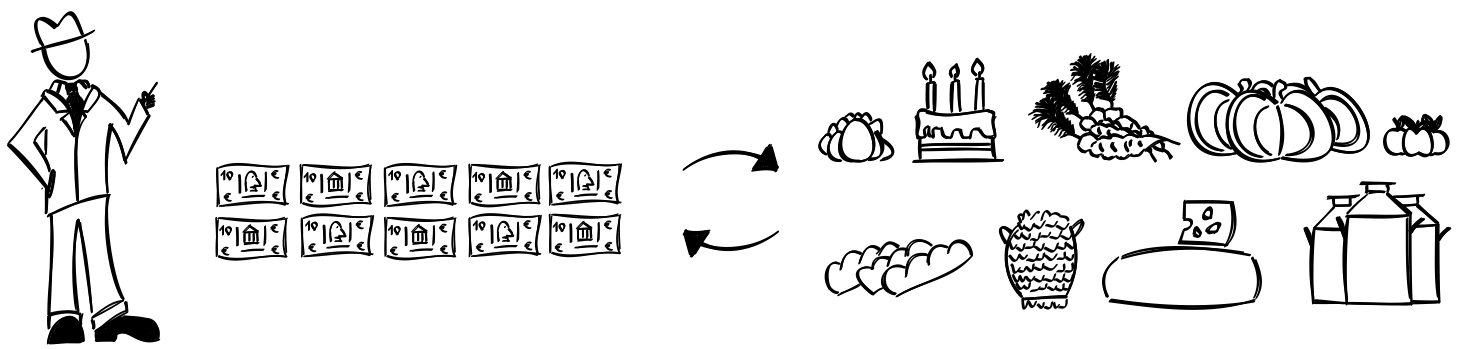
You and your fellows give a puzzled look. ‘Exchange’ you know, but ‘negotiate’? Never heard of that word and no idea what it’s good for. Besides, why do those notes have to be exchanged? Can’t they just be given?
Perhaps. But here’s the thing: the man looks like he knows what he’s talking about. So, after some deliberation, you collectively consent to try his idea.
A few days later, you’re pretty excited. The ease of using a tool that weighs nothing and can be exchanged for anything! Gone are the times when you asked the baker whether he could use a chicken for the bread he just gave you; now you give him one of those notes and on your way you are!
A few extra days later, you begin to notice two things:

What villagers have too much of is no longer just given away. In a way this makes sense, because why give something away now when you can get a note for it later? And vice versa, why give a note now for things you don’t need right now?
Trust in each other is making way for trust in those notes. The confidence you had that when you give something, it’ll somehow do its job and take care of you and the whole, begins to give way to an expectation—the expectation of ‘receiving’ a note for things you ‘give’.
The first milk sours and that’s never happened, but every plus has minuses, right?
The man with the shiny shoes has been watching your goings-on. ‘This is going quite well,’ he declares, ‘I can go again.’
‘Oh, one more thing,’ he follows up. ‘I’ll return in a week, asking each family to show me eleven ten-euro notes. That eleventh note will be your gift to me as a token of the progress I’ve made possible.’
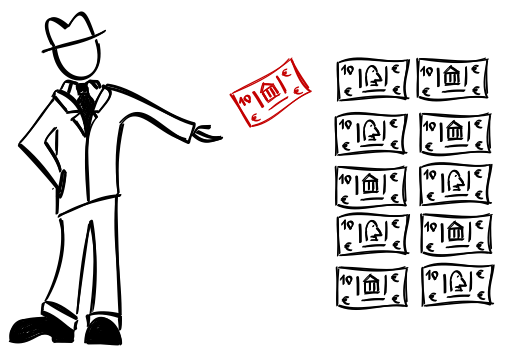
‘But,’ asks a villager perplexed, ‘where’s that eleventh note supposed to come from?’
The man conjures a reassuring smile on his face.
—‘You’ll see.’
With that, he turns and walks out of the village.
Let’s suppose this eleventh note is not produced in the village. Let’s also suppose that no notes from outside the village flow into the village. In other words, suppose every eleventh note needs to come from each of your pockets. Finally, let’s assume that a deal’s a deal: every family must be able to hand over that eleventh note, or else.
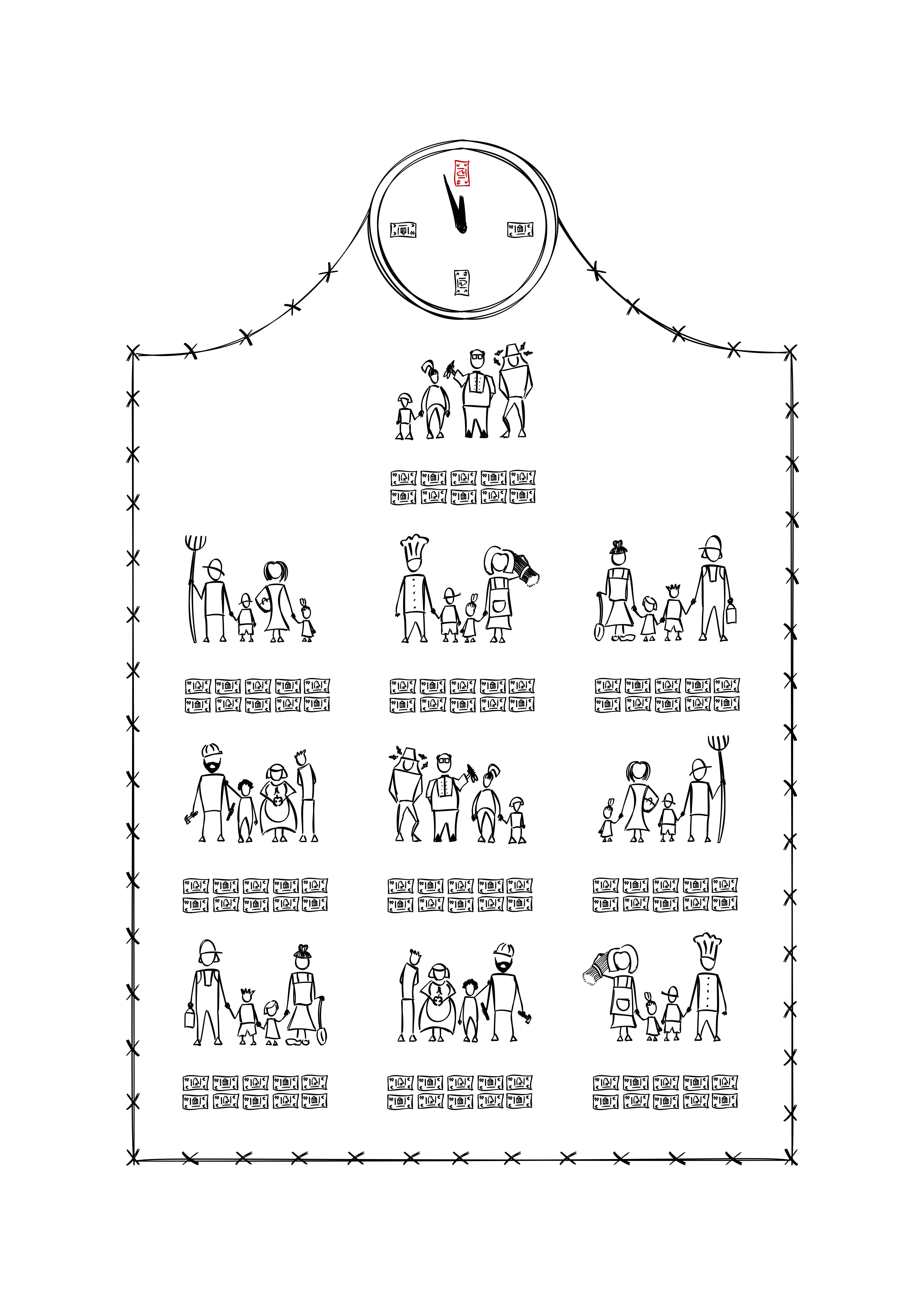
Before you turn the page, what kind of situation do you see arising?
And how would that situation make you feel?
